Old Bend & Downtown: Living in the Most Walkable Square Mile in Central Oregon
Long before Bend became known for master-planned westside communities and golf resort living, there was Old Bend, the original grid of streets west of the Deschutes River that gave the city its start. Today, this historic core, bounded roughly by Broadway Street, Tumalo Avenue, and Riverside Boulevard, remains one of the most distinctive and consistently sought-after places to live in Central Oregon.
A neighborhood built during Bend's timber boom
Old Bend's story is tied directly to the city's lumber-era origins. Many of the neighborhood's homes date back to the 1910s through the 1940s, built during a period when Bend's population and economy were booming alongside the Shevlin-Hixon and Brooks-Scanlon sawmill operations. A remarkable share of the neighborhood's original housing stock, more than 80 percent by some historical accounts, was built for mill worker families, and the concentration of Craftsman-style bungalows from this era is significant enough that portions of the neighborhood have been recognized for their eligibility for the National Register of Historic Places.
Walking through Old Bend today means walking through a genuinely preserved slice of that history. Original woodwork, hardwood floors, and mature, decades-old trees define many of the neighborhood's homes, a level of authentic character that simply can't be replicated in new construction, regardless of budget. Detached garages set back along alleyways, a design choice reflecting that many original residents owned automobiles, remain a distinctive architectural feature throughout the neighborhood's historic blocks.
Drake Park and the Deschutes River at the center of it all
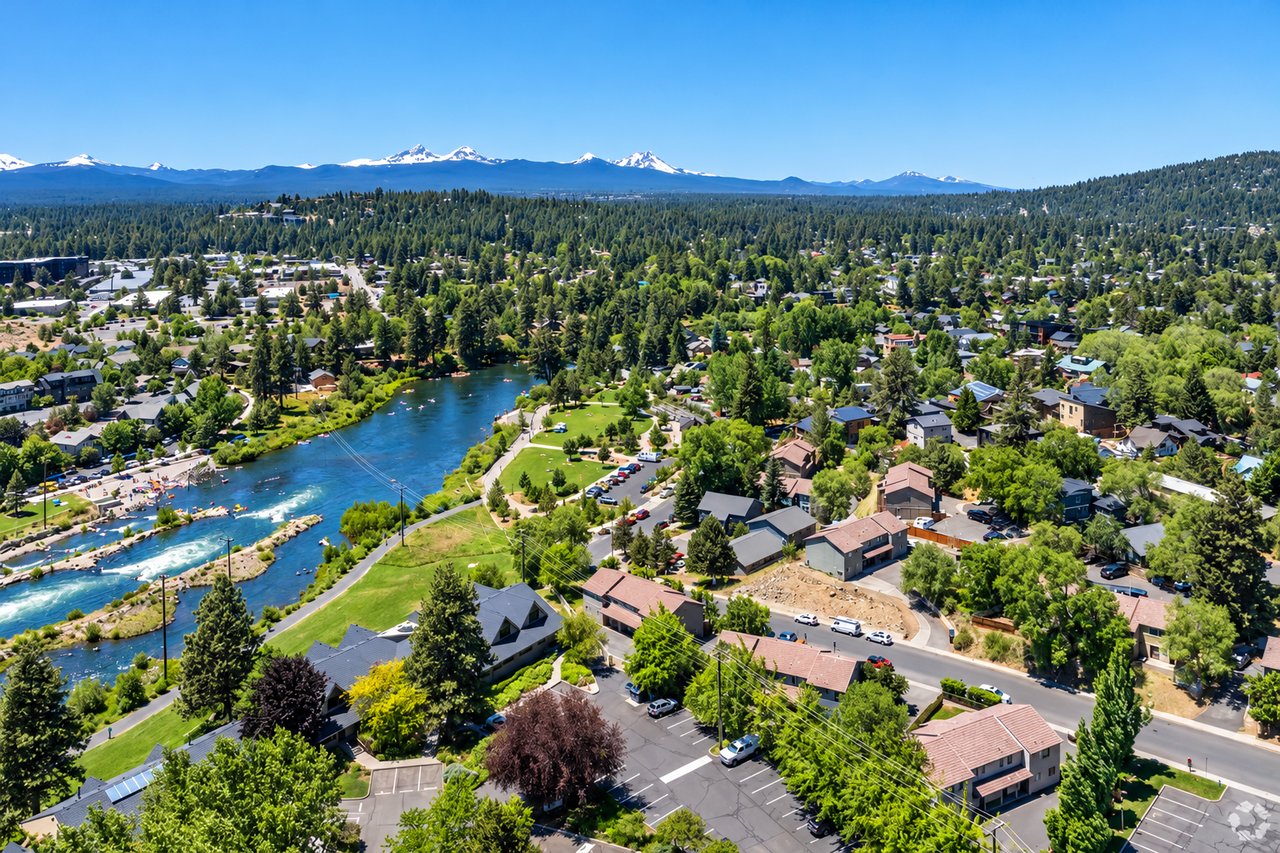
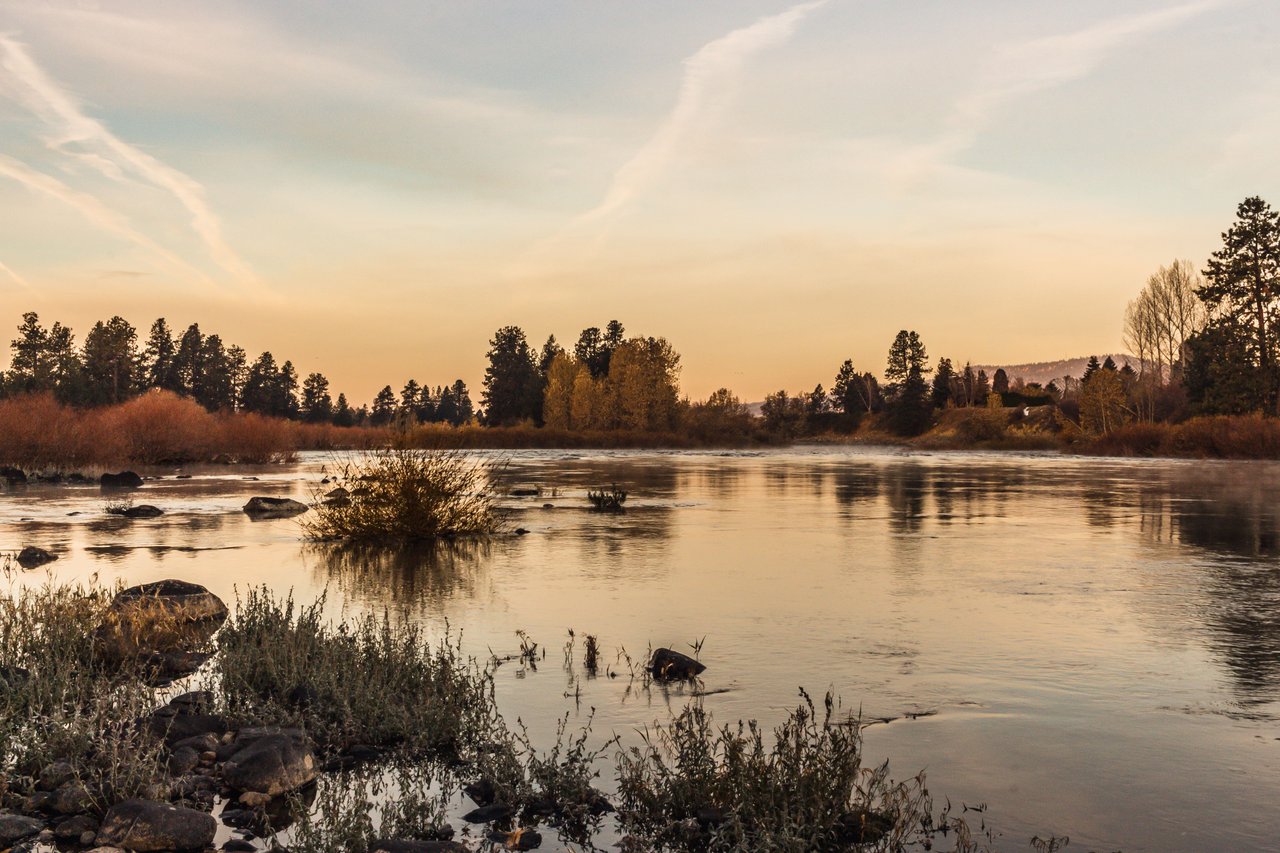
Old Bend's defining amenity is its direct relationship with the river. Drake Park, an eleven-acre green space along the Deschutes, anchors the neighborhood's identity, offering riverside paths, open lawn space for picnics and summer events, and views of Mirror Pond, a reservoir created in 1910 by the Bend Water, Light & Power Company dam that once served as the city's first source of electricity. Historic placards throughout the park commemorate Bend's timber town days, giving residents and visitors alike a tangible connection to the neighborhood's origins on every walk along the water.
The neighborhood's proximity to the river isn't just scenic, it's functional. Residents can walk from their front door to Drake Park, continue along the riverside path toward the Old Mill District, and reach Bend Whitewater Park and Columbia Park, all without needing to get in a car. This kind of genuine, everyday walkability is difficult to find anywhere else in Central Oregon, and it's central to why Old Bend commands such consistent demand.
The most walkable square mile in Central Oregon
Beyond the park and river, Old Bend's location puts residents within easy walking distance of downtown Bend's entire commercial core. Coffee at a local roaster, a stroll with the dog along the Deschutes, lunch at one of several well-regarded local restaurants, an afternoon working from a downtown coffee shop, dinner within walking distance, and multiple breweries along the way, all of this is realistically accomplished on foot from most homes in the neighborhood. Beloved local spots like Jackson's Corner on SW Delaware Avenue have become genuine neighborhood gathering places, known for farm-to-table fare and a family-friendly patio just steps from the historic homes surrounding it.
This level of walkability means many Old Bend residents genuinely don't need a car for day-to-day life, an experience that's rare in Bend and one that specifically appeals to a certain kind of buyer: downtown commuters who'd rather walk than drive, empty nesters trading a large lot for true urban living, and anyone who simply values being able to leave the car parked for an entire weekend.
What buyers should expect: character over square footage
Homes throughout Old Bend tend to be smaller and sit on more compact lots than what buyers find in Bend's newer westside or eastside neighborhoods, generally averaging under 1,500 square feet on lots often around a tenth of an acre. This is a genuine tradeoff buyers should understand clearly before falling in love with the neighborhood's charm: Old Bend isn't the place to look for open-concept floor plans, three-car garages, or quarter-acre yards. What buyers are paying for instead is walkability, historic character that cannot be recreated, and a location that puts Drake Park and the entire downtown core essentially at the front door.
Housing stock throughout the neighborhood includes primarily single-family bungalows and cottages, along with a mix of duplexes and, closer to downtown, condominiums that offer an even lower-maintenance entry point into the neighborhood's walkable lifestyle. Because Old Bend's historic housing stock is finite, essentially no new bungalows are being built within the original neighborhood grid, well-maintained properties here tend to hold their value and demand consistently, reflecting genuinely limited supply in a location that can't be replicated elsewhere in the city.
Condos and lower-maintenance options near downtown
For buyers drawn to Old Bend's walkability but not necessarily seeking a full historic home renovation project, condominiums in and around downtown Bend offer an appealing alternative. These properties typically provide the same unmatched proximity to Drake Park, the river, and downtown's restaurants and shops, without the maintenance demands of an early 20th-century single-family home. This combination of lock-and-leave convenience and unbeatable location has made downtown condos increasingly popular among buyers who travel frequently, empty nesters downsizing from a larger property, or investors seeking strong, location-driven long-term demand.
A day in the life in Old Bend
Life in Old Bend tends to follow a distinctly pedestrian rhythm. Mornings often start with coffee at a downtown café before a walk along the Deschutes River path, watching the water move past Mirror Pond toward the Old Mill District. Errands are handled on foot or by bike, whether that's a stop at a downtown market or an afternoon spent working from a neighborhood coffee shop. Evenings bring an easy walk to dinner and a stop at one of the area's several breweries, all within the same short radius that defines the neighborhood's daily life.
This rhythm appeals strongly to a specific kind of buyer, one who prioritizes lifestyle and location over square footage, and who finds genuine value in trading a car-dependent daily routine for one built entirely around walking. For residents who've lived this way, the appeal of Old Bend often has less to do with any single amenity and more to do with the cumulative effect of never needing to drive for the essentials of daily life.
Frequently asked questions about Old Bend and downtown living
Is Old Bend the same as downtown Bend? They're closely related but distinct. Old Bend refers to the historic residential neighborhood bordering downtown's commercial core, generally bounded by Broadway Street, Tumalo Avenue, and Riverside Boulevard, while downtown Bend itself refers more specifically to the commercial district of shops, restaurants, and businesses that Old Bend residents can walk to directly.
Are Old Bend homes good candidates for renovation? Many are, given the neighborhood's stock of well-built early 20th-century bungalows, though buyers should budget for the realities of updating a century-old home, including potential electrical, plumbing, and foundation considerations that don't apply to newer construction elsewhere in the city.
How does Old Bend compare to Northwest Crossing in terms of walkability? Both neighborhoods are known for walkability, but Old Bend offers direct access to downtown Bend's full commercial core and Drake Park specifically, while Northwest Crossing centers around its own dedicated, more recently built town center on the city's west side.
Is parking a challenge in Old Bend given its historic street design? Many homes retain their original detached garages along rear alleyways, though street parking and lot sizes throughout the neighborhood reflect early 20th-century design standards rather than the wider driveways and attached garages common in newer Bend neighborhoods.
If you're drawn to Old Bend's history, walkability, and riverside charm, or considering a downtown condo as a lower-maintenance alternative, we'd love to walk you through current listings and help you find the right fit.